Linking occurrences
Видео
|
В этом видео (07:14) администратор данных GBIF Мари Грожан (Marie Grosjean) рассказывает о связывании записей о находках в системе GRSciColl. Если у вас не получается посмотреть встроенное видео с Vimeo, вы можете скачать его на свой компьютер со страницы Файлы для скачивания. |
Video transcript
Нажмите, чтобы раскрыть
Reminder: GBIF occurrences
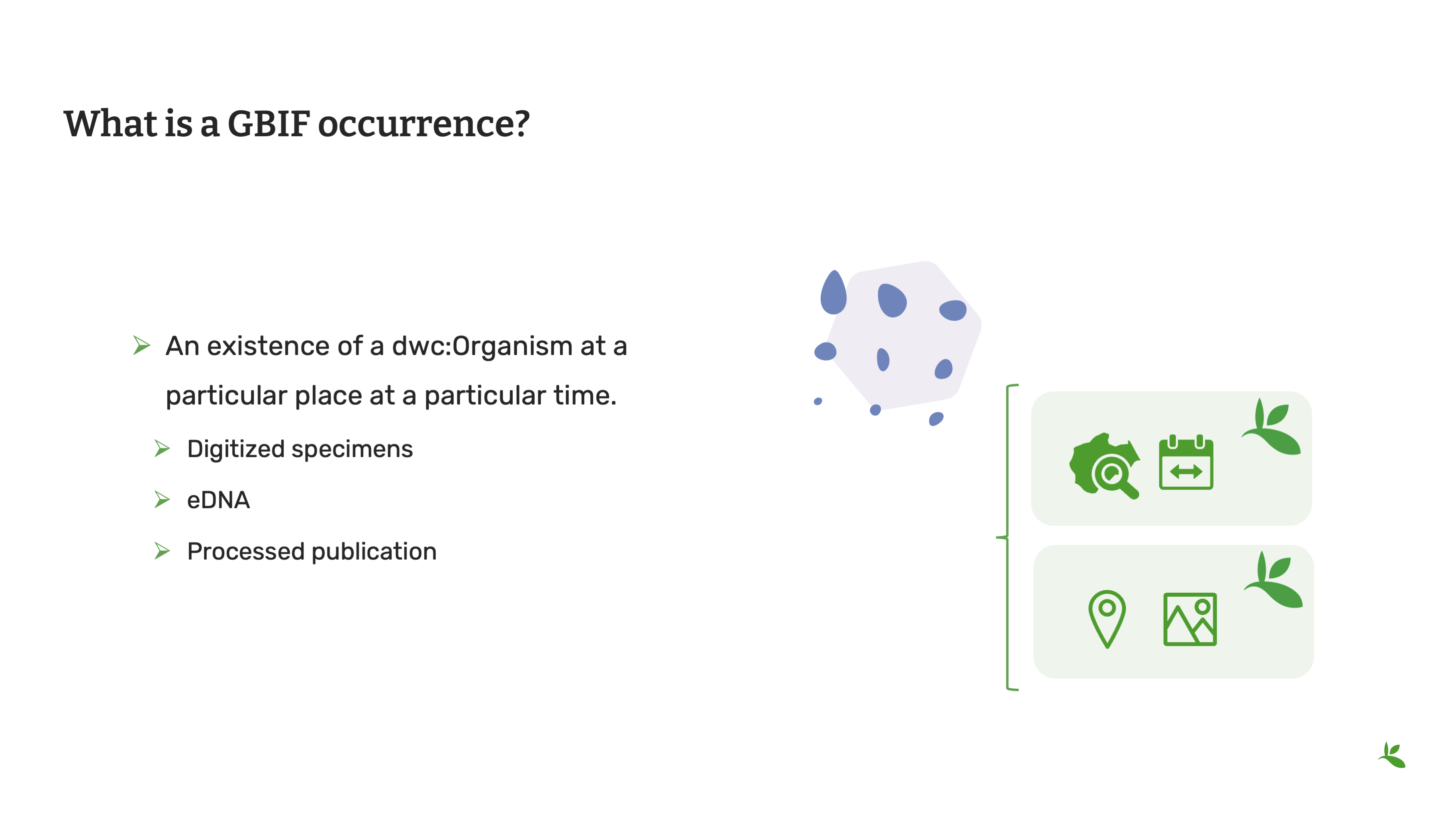
According to the Darwin Core documentation an occurrence is:
An existence of a dwc:Organism at a particular place at a particular time.
В контексте естественно-научных коллекций записи о находках часто представляют собой оцифрованные сведения о коллекционных экземплярах. Это могут быть сохранённые экземпляры, ископаемые образцы или живые организмы. Однако это не единственные типы записей о находках из базы данных GBIF, которые можно найти в GRSciColl. Однако на GRSciColl можно найти не только эти типы записей о находках, опубликованных через GBIF. Некоторые записи могут быть получены в результате анализа проб окружающей среды или извлечения информации из книг и научных публикаций (см., например, деятельность PLAZI в GBIF).
Occurrences shared on GBIF.org can come from a wide range of data providers: Museums, herbaria, journals, etc.
The breath of information associated with a given occurrence can vary. Sometimes, all that is available is a catalogue number, a family, a region, a date range, etc. While other occurrences may be associated with precise geolocation and images.
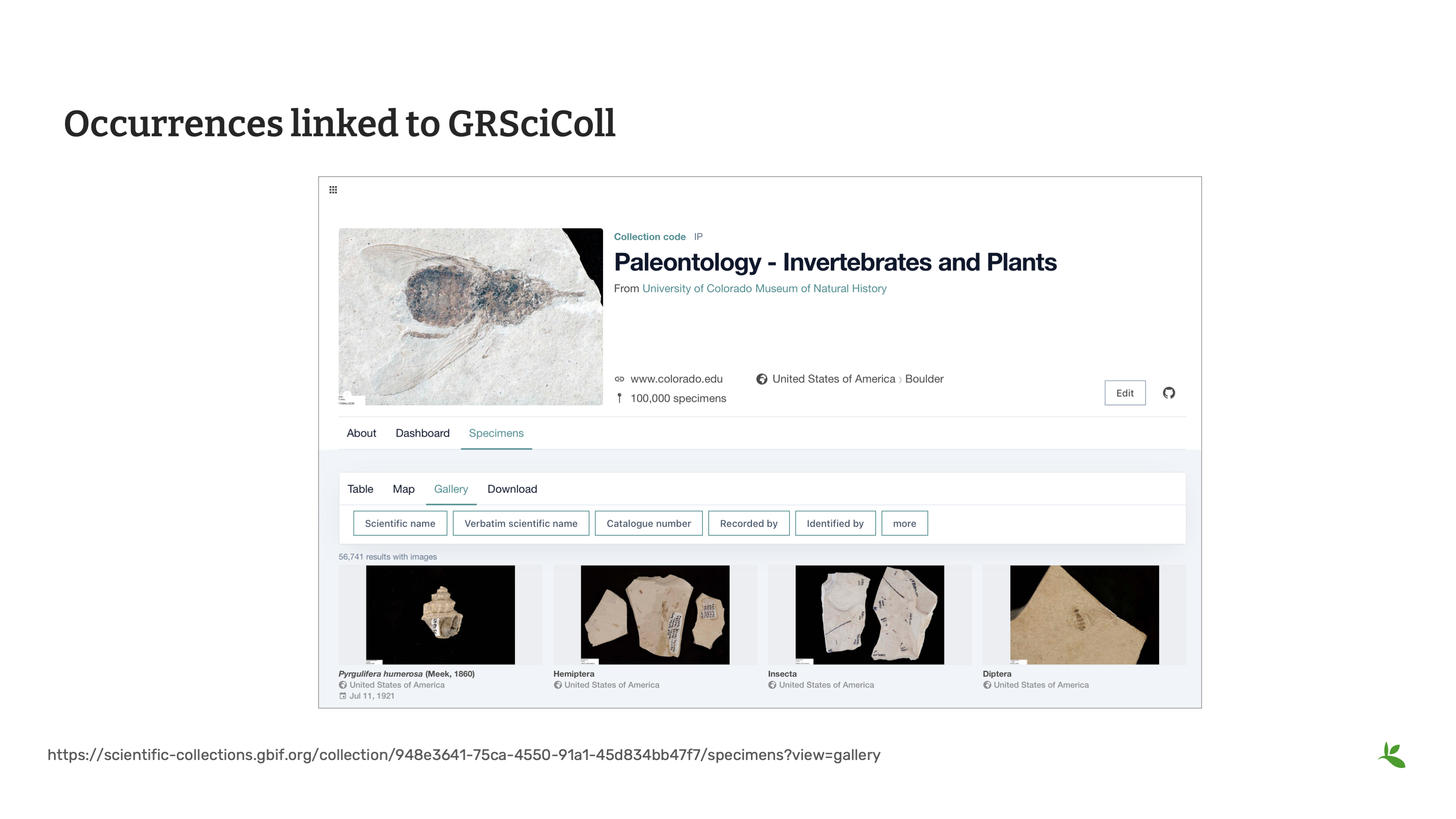
As mentioned before, when possible, the GBIF’s system attempts to link specimen-related occurrences published on GBIF to GRSciColl entries. This allows us to create metrics and dashboards for institutions and collections regardless of the way data were provided to GBIF.
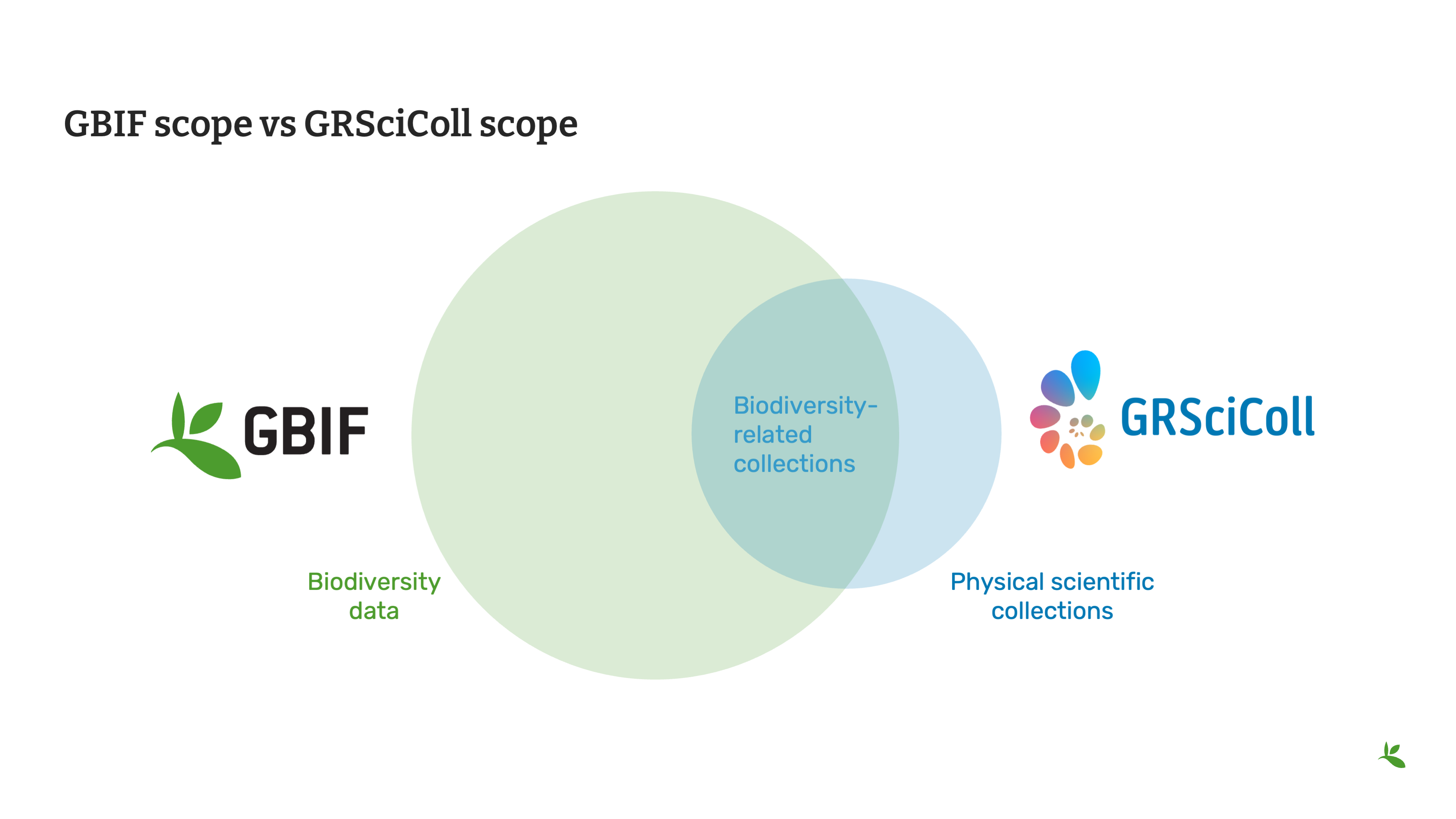
GRSciColl and GBIF have overlapping content: many of the collections listed in GRSciColl are also datasets on GBIF. However, the scope of GRSciColl goes beyond biodiversity data, for example, GRSciColl contains mineralogy and archaeology collections but doesn’t include things like citizen science observation data. See this blog post explaining the type of data that can be shared on GBIF.
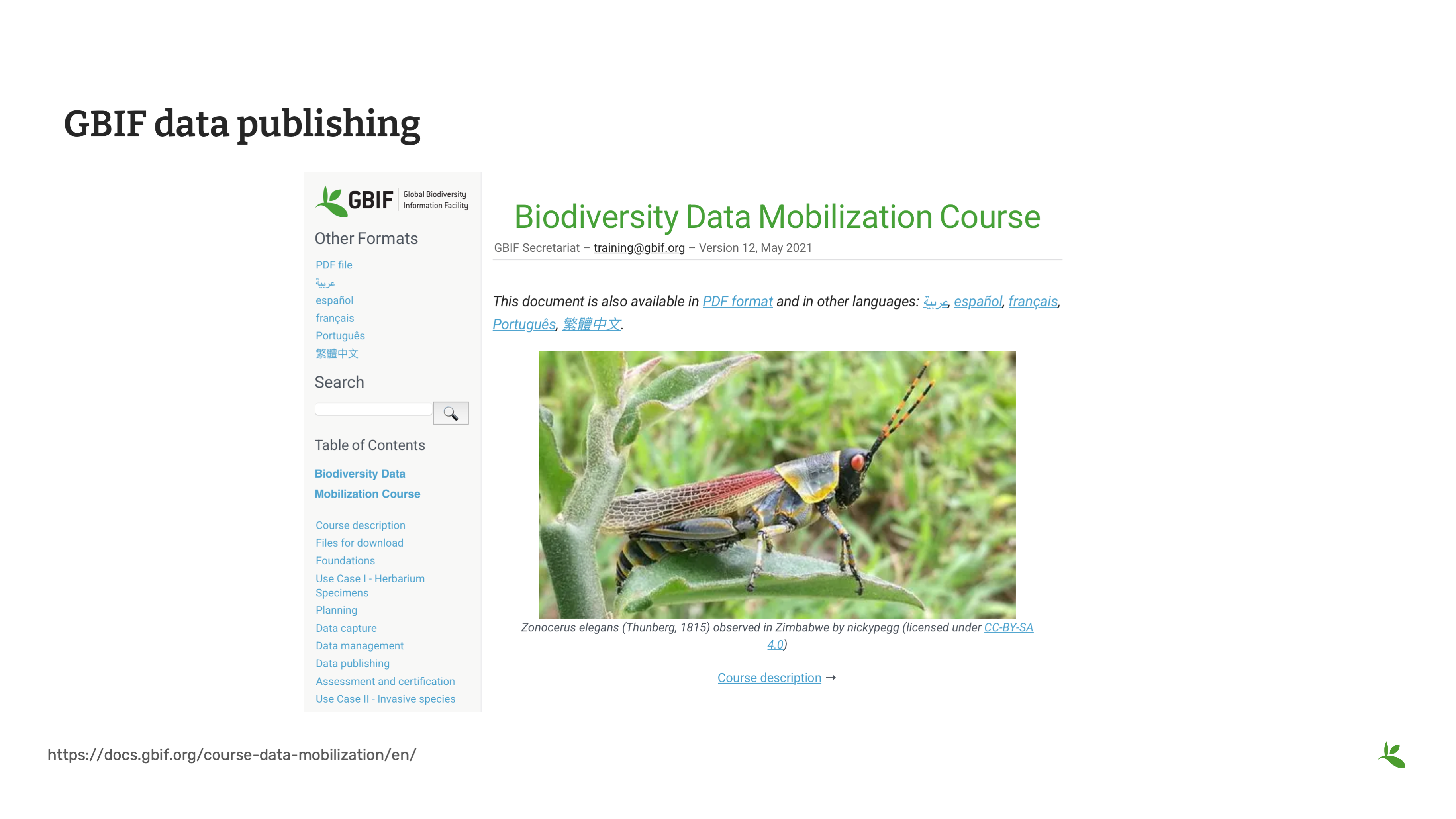
В данном учебном материале не рассматривается, как следует публиковать данные в GBIF; если вас это интересует, рекомендуем ознакомиться с курсом Мобилизация данных о биоразнообразии. Этот записанный вебинар Data Use Club также является хорошим введением в то, как данные обмениваются и обрабатываются в GBIF.
How are GBIF occurrences linked to GRSciColl?
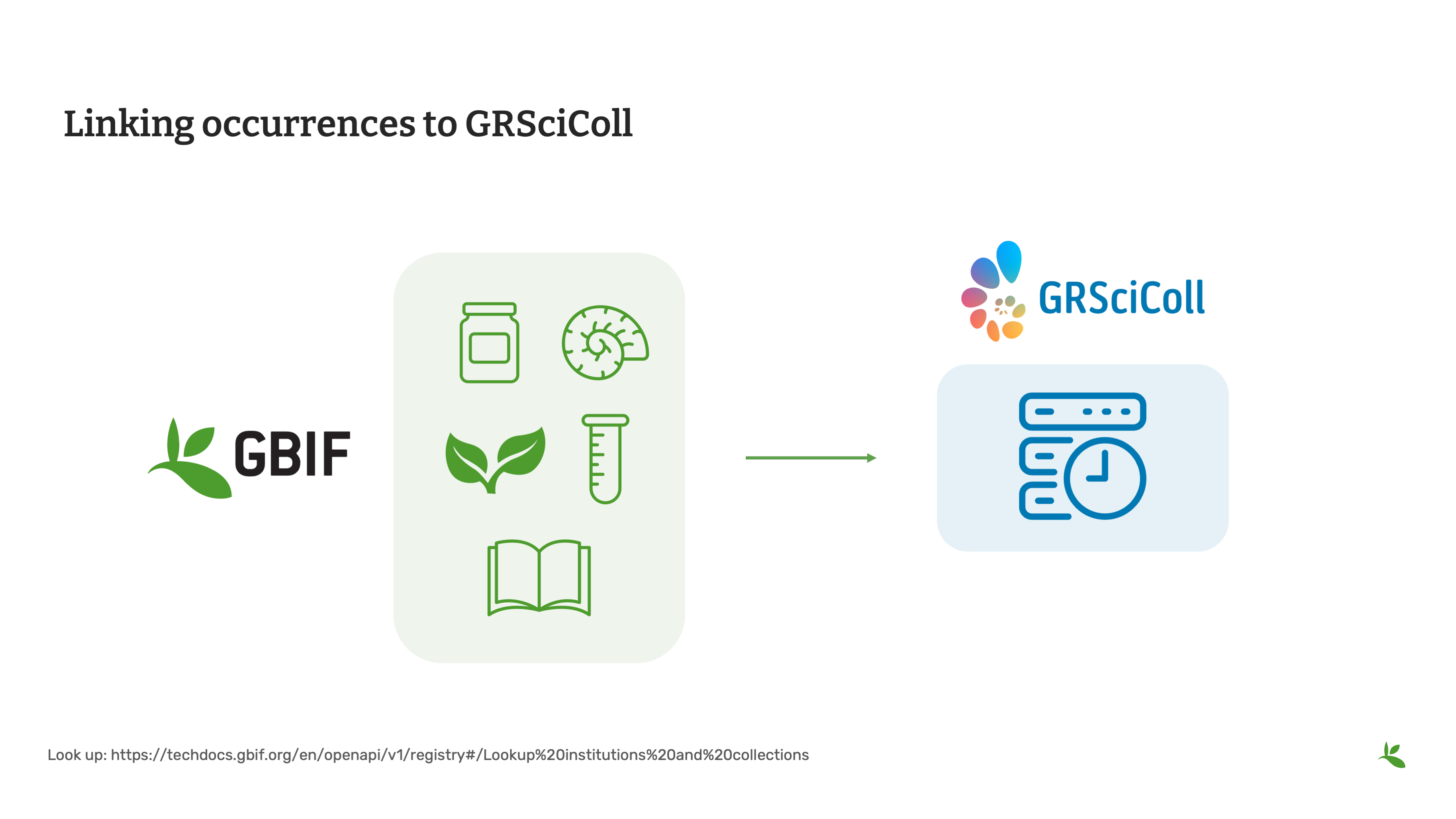
Для отображения на сайте GRSciColl и связывания с записями GRSciColl отбираются только записи о находках со следующими значениями поля basisOfRecord:
-
Preserved Specimen
-
Fossil Specimen
-
Living Specimen
-
Material Sample
-
Цитирование материала
Каждый раз, когда одно из этих наблюдений обрабатывается GBIF (при его публикации или переосмыслении), GBIF пытается сопоставить его с записями GRSciColl, используя службы поиска по коллекциям https://techdocs.gbif.org/en/openapi/v1/registry#/Lookup%20i, учреждениям%20aи коллекциям%20c[служба поиска GRSciColl^] а также кэшированную версию GRSciColl.
| Using a cached version of GRSciColl means that the data used to interpret occurrences isn’t the most up to date. There is often a lag of a few days between an update in GRSciColl and the version that is used to interpret occurrences on GBIF. Sometimes, you or a GBIF administrator will need to trigger the occurrence republishing or re-interpretation in order to ensure that occurrences are linked to the correct entries a few days after GRSciColl update. |
The GRSciColl lookup service will attempt to match occurrences based on the following:
| Information associated with the occurrence | Information associated with GRSciColl entries |
|---|---|
collectionCode |
Collection code and alternative codes |
institutionCode |
Institution code and alternative codes |
ownerInstitutionCode |
Institution code and alternative codes |
collectionID |
Collection identifiers, UUID and URL(s) |
institutionID |
Institution identifiers, UUID and URL(s) |
Dataset key |
Collection and institution occurrence mappings |
Publishing country |
Collection and institution country in addresses |

There are two ways to ensure that occurrences get matched to the correct entries:
-
Using the same codes and identifiers in occurrences and GRSciColl
-
Adding explicit mappings in GRSciColl
Matching codes and identifiers
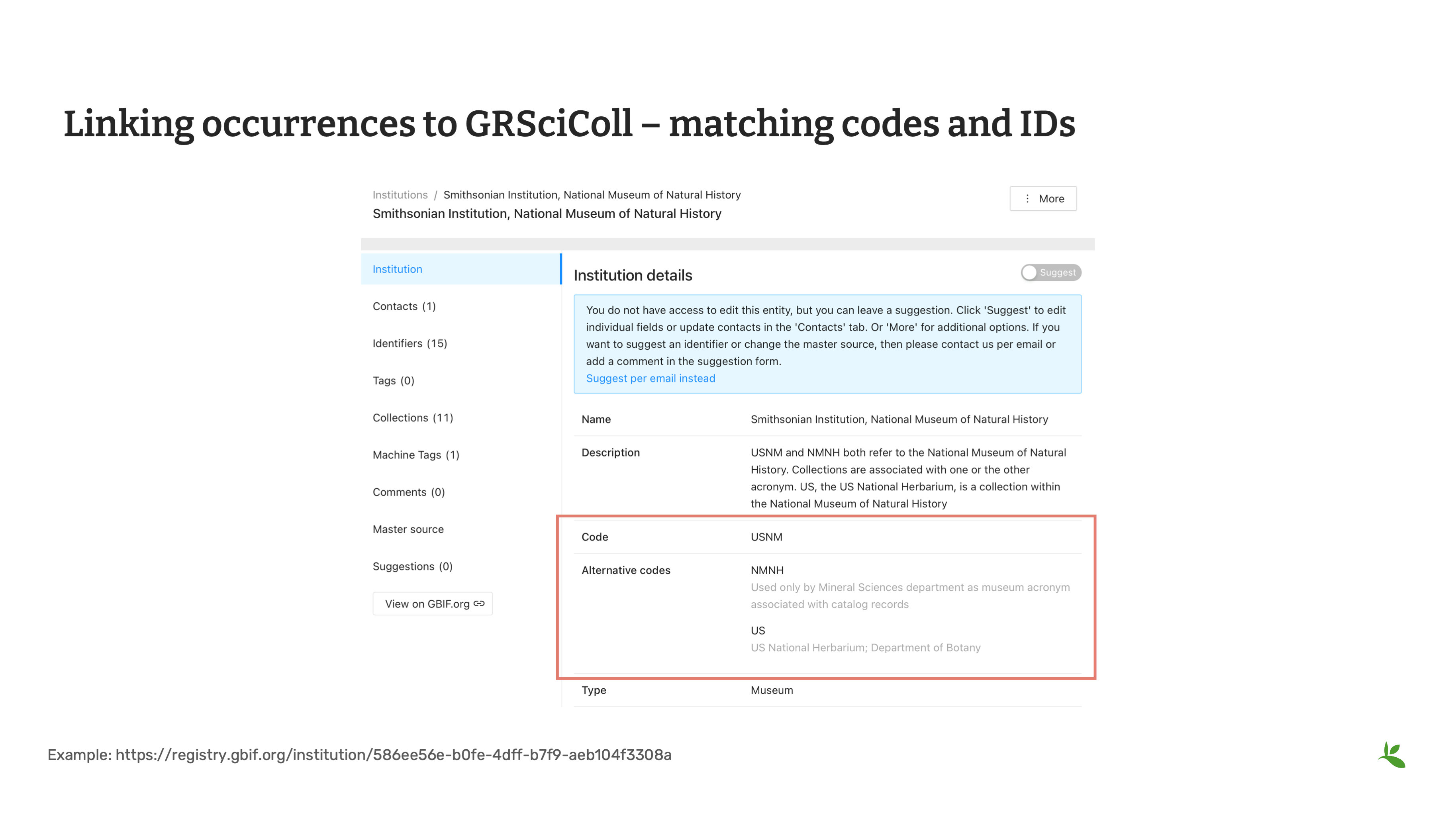
Occurrences are linked to GRSciColl if the values in the collectionCode, institutionCode, ownerInstitutionCode, collectionID and institutionID fields match the GRSciColl collection and institution codes and identifiers.
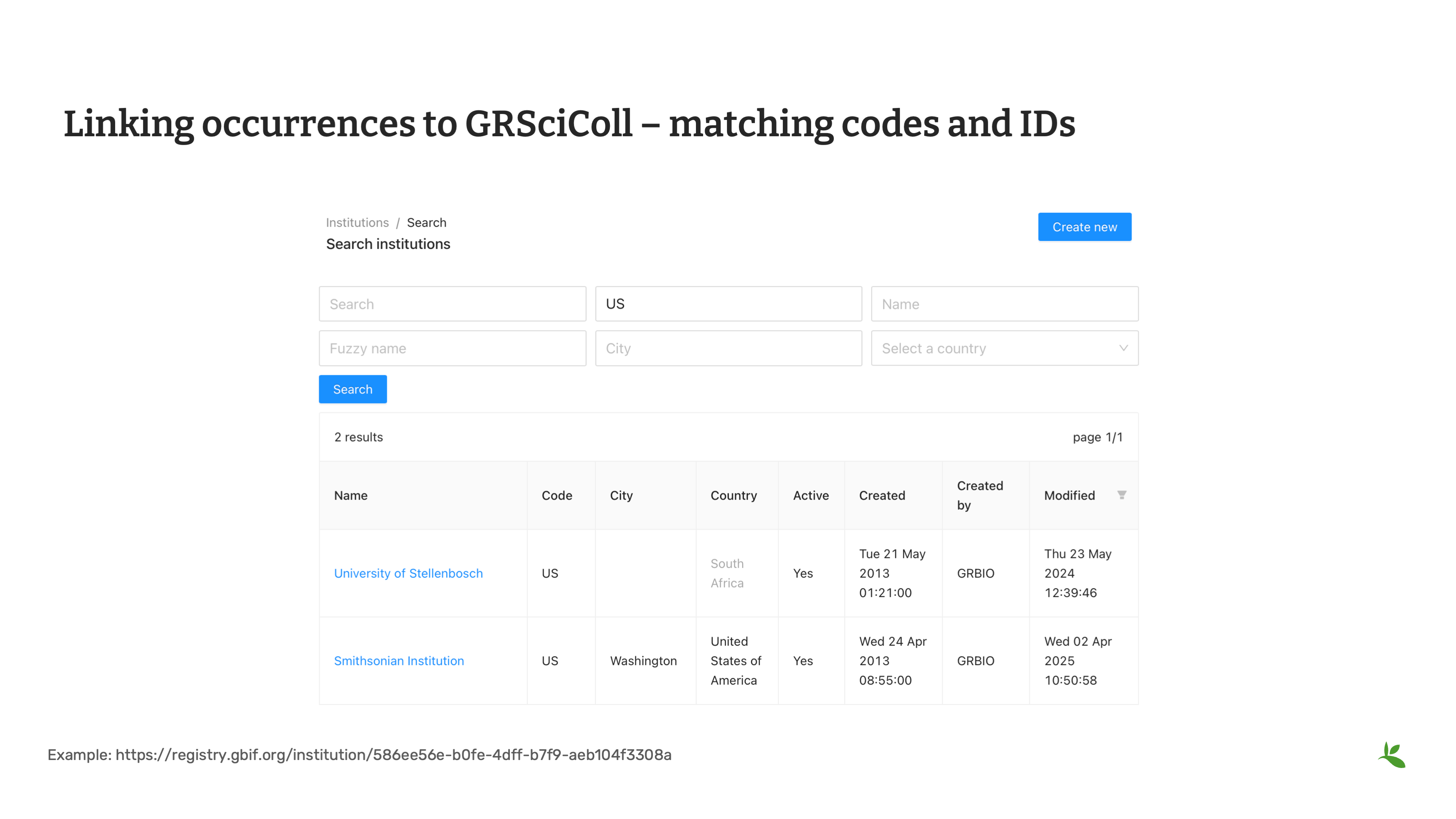
Any of the codes or alternatives codes of a collection or institution can be used in the collectionCode and institutionCode fields. However, several collections or institutions can have the same codes. This means that matches based on codes only are not always reliable. When two GRSciColl entries have the same code, the algorithm compares the occurrence publishing country with the GRSciColl entry countries to try disambiguating the match. This is why all the occurrences that are matched based on codes are flagged as “fuzzy” on GBIF.
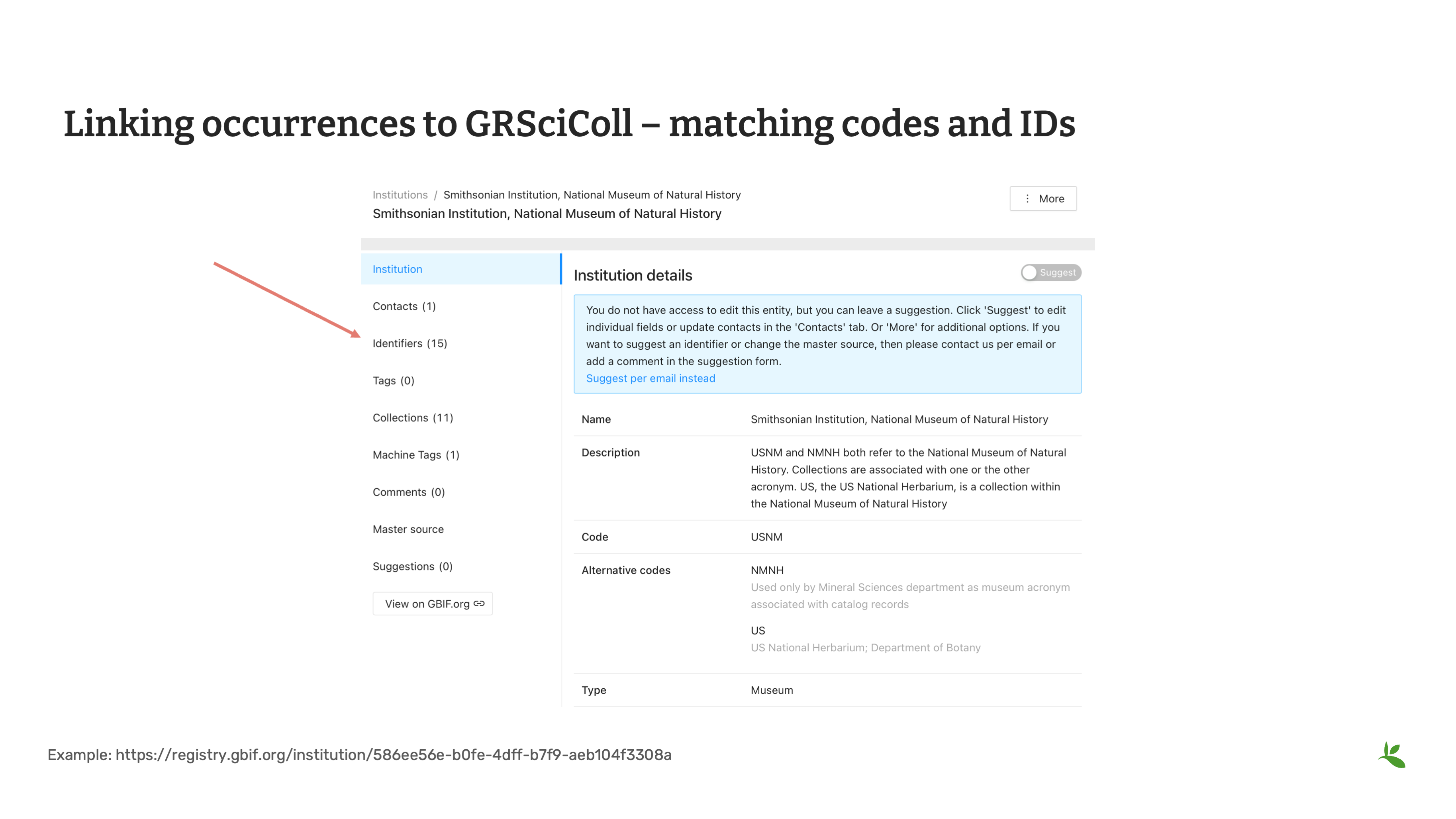
In order to ensure unambiguous matches, we recommend using identifiers to link occurrences to GRSciColl entries. Any identifier associated with a GRSciColl collection or institution can be used in the collectionID and institutionID fields.
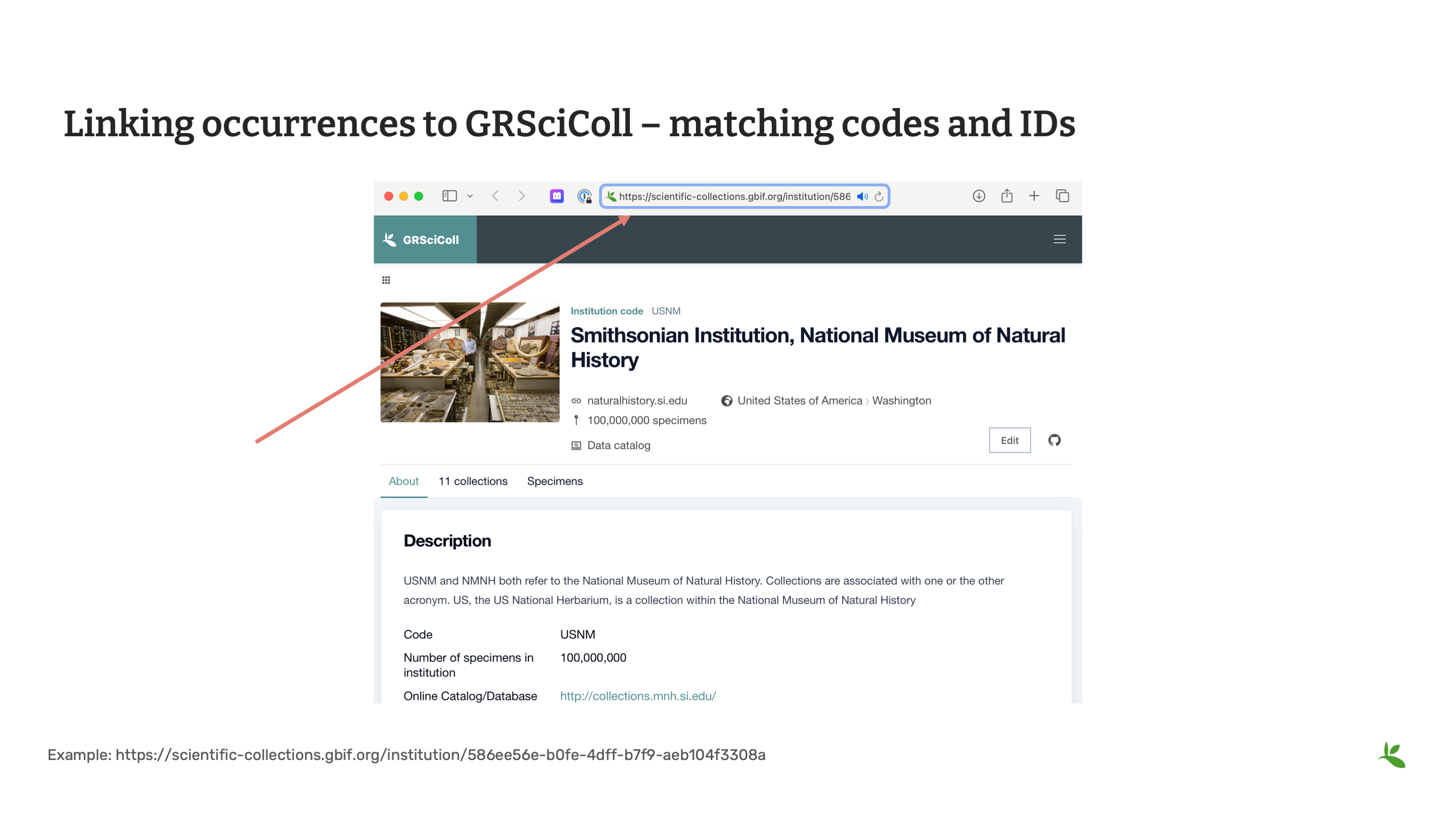
In addition to that, the UUID or the URL of a GRSciColl collection or institution can also be used.
Currently, the recommended and most declarative way to link data to institutions or collection entities in GRSciColl is to use the full URL for the entity. For example, when using Darwin Core:
`dwc:institutionID`: `https://scientific-collections.gbif.org/institution/e3d4dcc4-81e2-444c-8a5c-41d1044b5381`
`dwc:collectionID`: `https://scientific-collections.gbif.org/collection/772f9e37-4643-452b-82b4-a06550283096`
Explicit mapping with the GRSciColl API
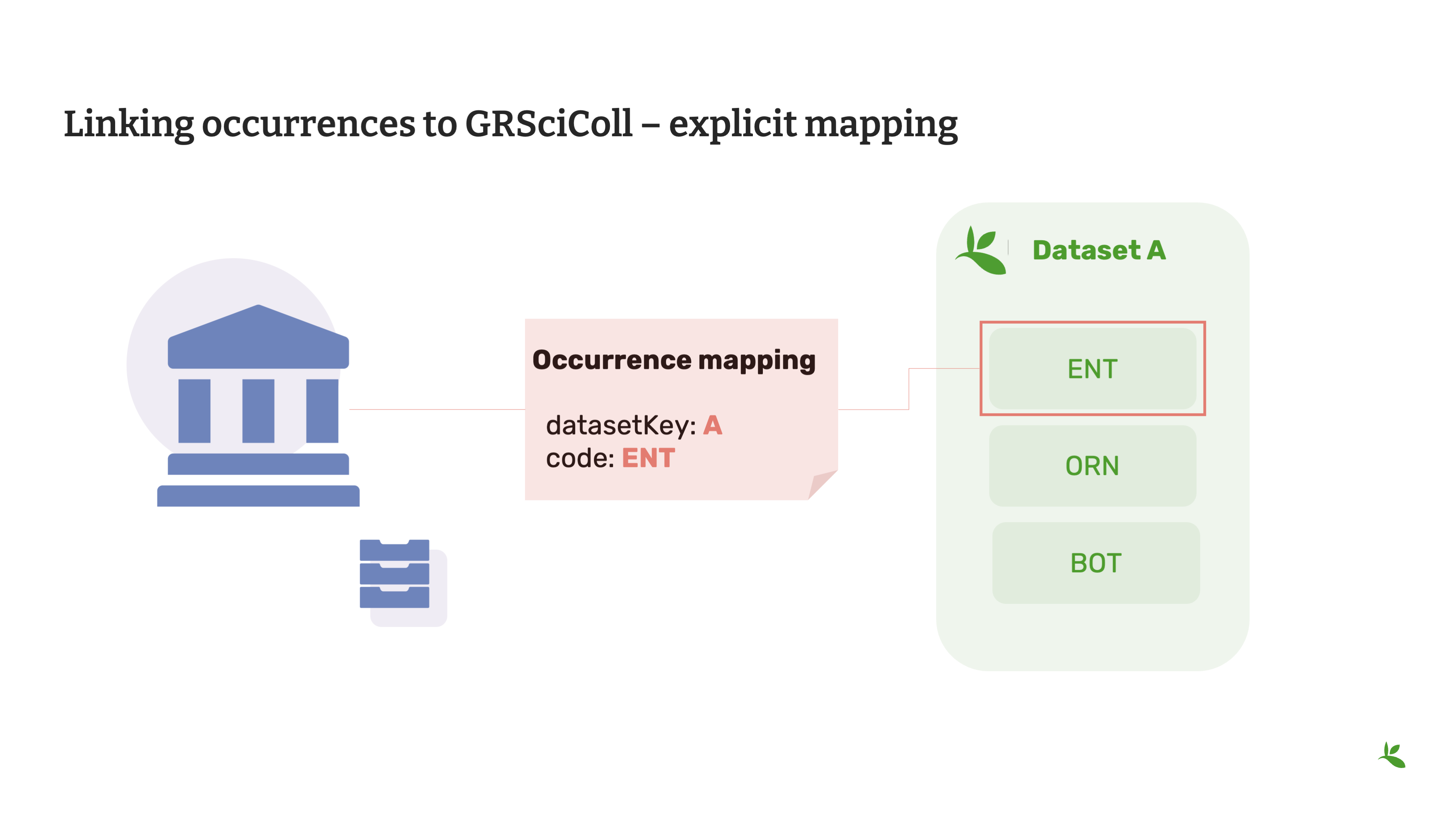
GRSciColl editors can use the GRSciColl API to create explicit mappings between GRSciColl collections and occurrences. A mapping can only be associated with a given GRSciColl entry and will be defined by a dataset key and a code used in the occurrence. For example, a mapping can be added to an entomology collection to specify that all the occurrence records with the collection code “ENT” for a given dataset should be linked to that collection.
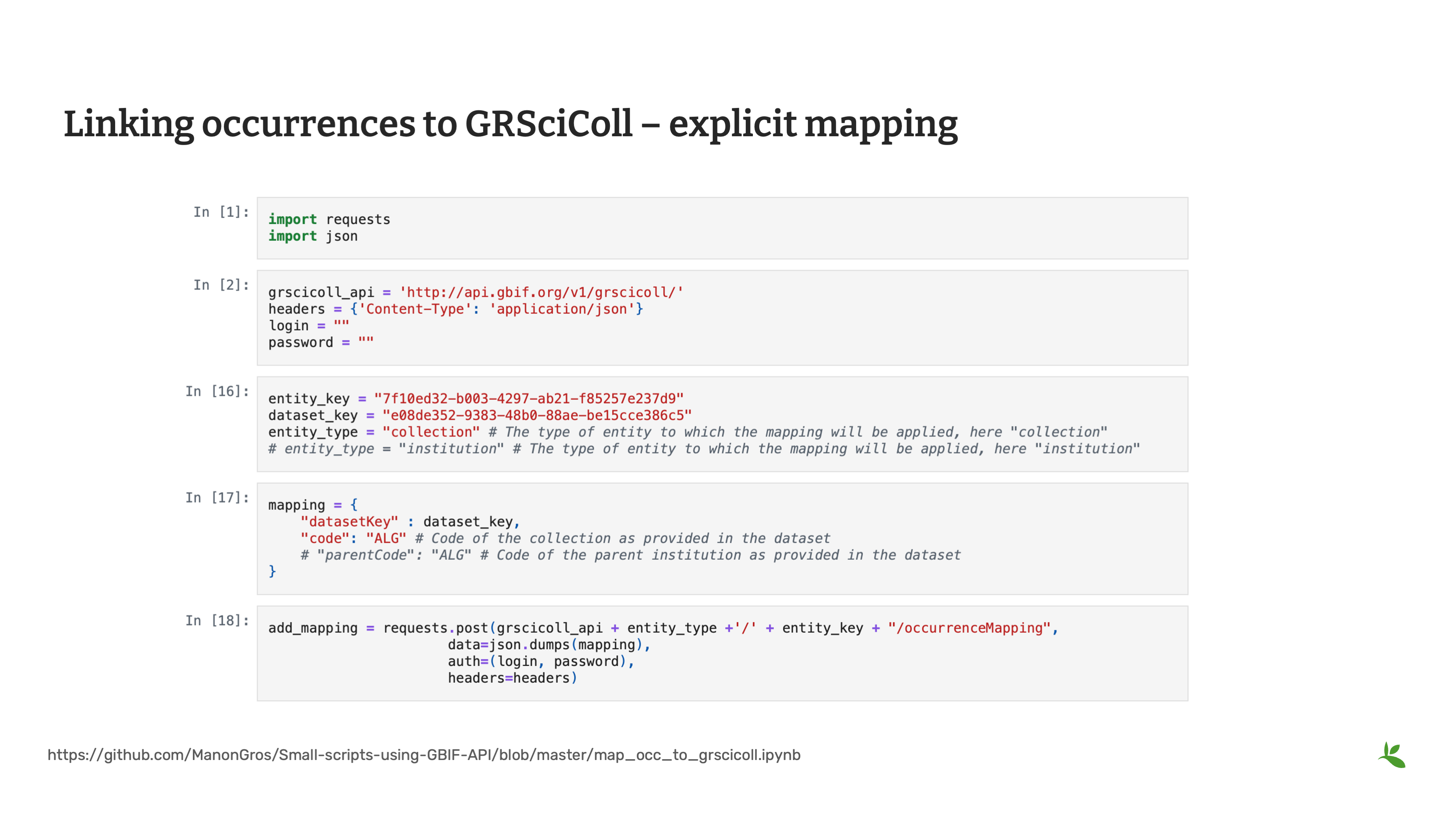
Here is an example in python of adding occurrence mapping to a GRSciColl entry (see also this tutorial).
Occurrence explicit mapping can be particularly useful when trying to adjust the mapping of datasets published by third party systems like the European Nucleotide Archive or PLAZI.
Проверка знаний
|
Quiz yourself on the concepts covered in this module. Верно или Неверно?
|