Use case: Developing a national Participant node in Darwinia
Примечания
| Please note that this use case is fictitious, based on an imaginary country “Darwinia” and built for instructional purposes. Any reference to countries and structures/organizations, real or otherwise, are used merely to facilitate the training and do not reflect reality. |
The exercises in this course will build on a fictitious use case scenario "Developing a national Participant node in Darwinia" that sets the context for you to go through the steps of building a case for GBIF Participation and establishing a new node. You will also be invited to consider your own context in additional self-study exercises.
In the use case, you will follow the story of a team based at a natural history museum that received a grant to start work on digitizing their collections and publish data through GBIF. They see benefits of participating in the GBIF network and would like to build a case for their country to join and establish a national node.
Сценарий
Музей естественной истории Дарвинии, располагающий крупнейшей биологической коллекцией в стране Дарвиния, совместно с небольшой гербарной коллекцией Национального университета Дарвинии подал заявку на конкурс проектов по мобилизации данных о биоразнообразии, объявленный Глобальной информационной системой по биоразнообразию (GBIF). До начала проекта обе организации обладали ограниченными возможностями в области управления данными, однако им удалось получить грант на начало оцифровки своих коллекций. После прохождения обучения сотрудники музея установили программное обеспечение для управления коллекциями, и музей опубликовал свои первые наборы данных в GBIF. Гербарий по-прежнему использует электронные таблицы для управления данными, но уже добился значительного прогресса в оцифровке коллекции и также опубликовал данные в GBIF, получив разрешение на использование IPT, размещённого на базе Музея естественной истории Дарвинии.
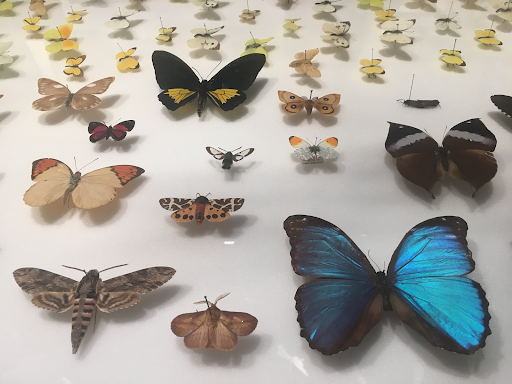
The staff in both collections are already recognizing the benefits of improved data management on the institutional level and of sharing their data across institutions. The national university has recently started a Master’s programme for biodiversity and conservation studies within the biology faculty and is keen to integrate teaching on biodiversity informatics within the course. Both institutions receive national funding through the Ministry for Research, Science and Higher Education.
National context
Darwinia is not yet a GBIF Participant and there is no national node in the country. The project team held a national workshop to try to engage with potential users of the data they are publishing.
The Convention on Biological Diversity (CBD) focal point and clearing house mechanism (CHM) are based at the Ministry of Environment and have been informed of the data mobilization project. They are responsible for the national biodiversity reporting and are currently late in submitting the seventh National Report to the CBD. They have been struggling to find sufficient information to prepare the report.
The Ministry for Research, Science and Higher Education is better funded than the Ministry of Environment, but both suffered budget cuts under the previous government. The CBD focal point is planning to apply for a Global Environment Facility (GEF) grant to establish a national biodiversity monitoring system that would address the gaps in biodiversity information identified in the national report through the establishment of a database. The Ministry of Environment and the Ministry for Research, Science and Higher Education do not have any policies regarding the sharing of biodiversity data on the national level, although the government has been promoting transparency and open data.
Representatives from the National Parks Service (under the Ministry of Environment) came to the project kick-off meeting, and were interested in improving their data management, as currently each park manages its data separately. Darwinia has a very active tourism industry and is well known for its national parks and nature, although a growing number of the charismatic fauna and flora are threatened due to habitat loss (primarily due to expanding mining and logging industries) and the impacts of invasive alien species. Representatives of the Ministry for Tourism were also invited to the meeting, and there are several private reserves that focus on eco-tourism that are receiving a growing number of tourists annually.

Several international conservation bodies (WWF, IUCN etc.) have national programmes and bring international scientists to work on conservation projects involving the parks, but tend not to share data between them. Citizen science has not yet taken off in the country, and only a few tourists are making use of citizen science applications.
Threats to biodiversity
Darwinia has an active extraction industry, which employs environmental and social impact assessment consultants. There is currently no public access to these data and they are not consistently formatted. The mining industry is an important part of the country’s economy.

The Department of Forestry is under the Ministry of Environment and gives permits for logging. Illegal logging is a growing problem, especially because many communities depend on non-timber forest products.
The Ministry of Environment is aware of the growing impact of invasive alien species (IAS) that are damaging the ecosystems in the parks, and affecting waterways. They have started an IAS eradication programme in the national parks.
Other factors
Новое правительство пришло к власти в конце 2021 года. В министерствах произошли многочисленные кадровые изменения. Новый министр исследований, науки и высшего образования по образованию биолог, ранее работавший в национальном университете и понимающий важность хранящихся там научных коллекций. Кроме того, в ходе предвыборной кампании было обещано обеспечить более устойчивый экономический рост за счёт поддержки развития туризма в стране.