Communauté de pratique
| Dans ce module, vous apprendrez à connaître la communauté de pratique du GBIF, les opportunités de renforcement des capacités et de financement et comment rester en contact avec le GBIF. |
Communauté de pratique
|
Dans cette vidéo (05:33), Mélianie Raymond, responsable de la communauté et de la capacité du GBIF, décrit les principales façons dont les bénévoles contribuent à la communauté de pratique du GBIF. Si vous ne pouvez pas regarder la vidéo Vimeo intégrée, vous pouvez la télécharger localement (MP4 - 45 Mo). |
Transcription de la présentation
Cliquez pour développer
Diapositive 1 - Contribuer à la communauté de pratique du GBIF
Dans cette vidéo, j’expliquerai comment une communauté croissante de bénévoles contribue au développement des capacités du réseau GBIF, et comment vous pouvez participer à ces efforts pour permettre un accès libre et gratuit aux données sur la biodiversité provenant de toutes les sources.
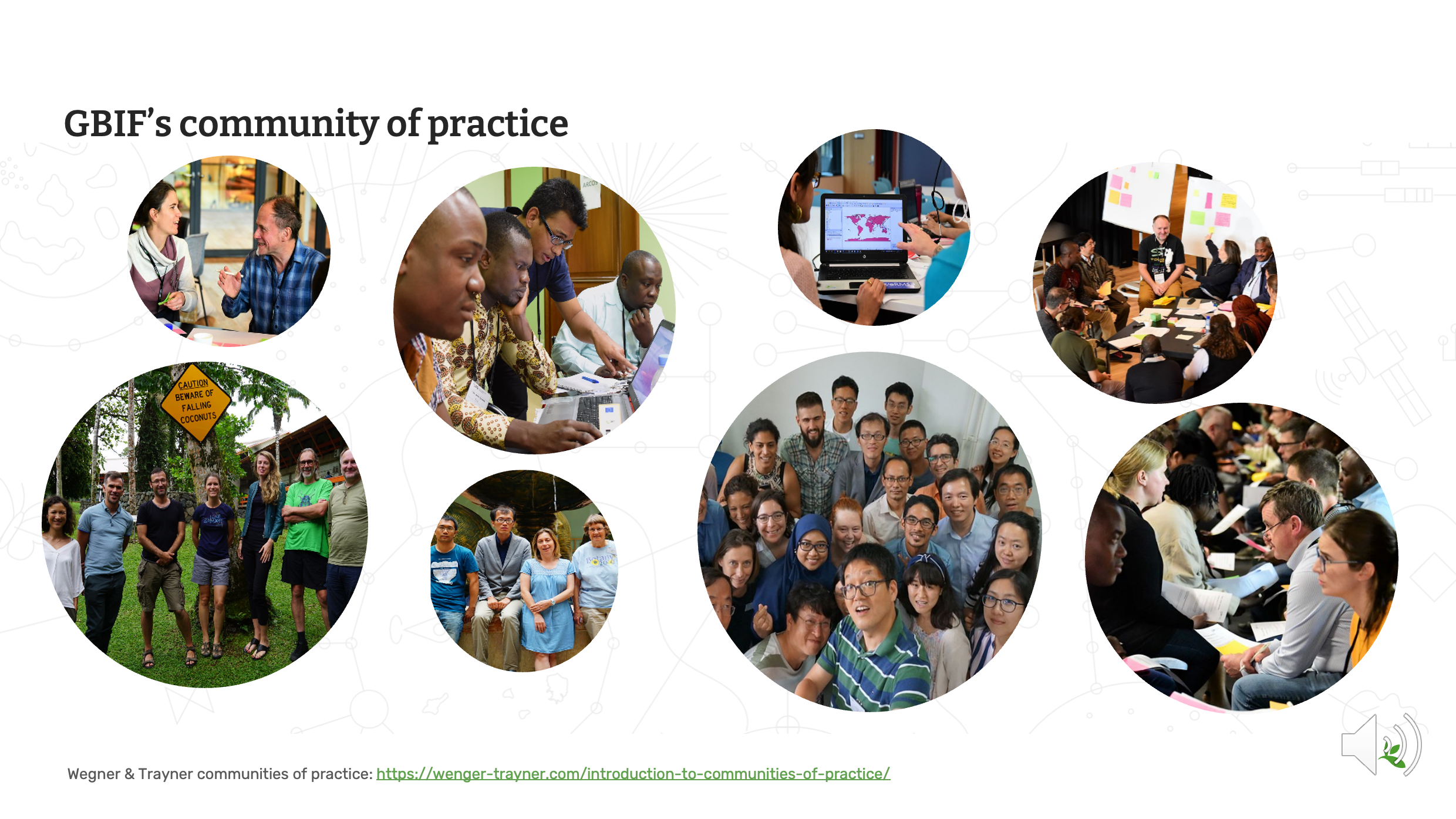
Diapositive 2 - La communauté de pratique du GBIF
Outre le réseau formel des participants au GBIF, un réseau beaucoup plus large d’individus et d’institutions est impliqué dans les activités du GBIF, tant à l’intérieur qu’au-delà des pays participants formels du GBIF. Ces personnes sont impliquées dans des activités allant de la publication de données sur la biodiversité à l’utilisation des données du GBIF dans la recherche, en passant par l’aide à l’amélioration de la qualité des données et le soutien à d’autres personnes pour qu’elles apprennent à tirer profit du GBIF.
Ces personnes forment la communauté de pratique du GBIF.
Les communautés de pratique sont décrites par les sociologues Wegner et Trayner comme des « groupes de personnes qui partagent une préoccupation ou une passion pour quelque chose qu’elles font et qui apprennent à mieux le faire en interagissant régulièrement ».
La communauté de pratique GBIF a émergé du réseau mondial des praticiens de la biodiversité grâce à leur volonté de collaborer, de partager leurs connaissances, leurs outils et leurs normes, et de s’entraider pour progresser vers l’objectif commun de données ouvertes sur la biodiversité contribuant à la recherche, à la conservation de la nature et au développement durable.
Cette communauté a joué un rôle clé depuis le tout début, même aux origines du GBIF.
Le secrétariat du GBIF a pour rôle de soutenir les interactions entre les membres de la communauté de pratique et d’encourager son développement et sa croissance.
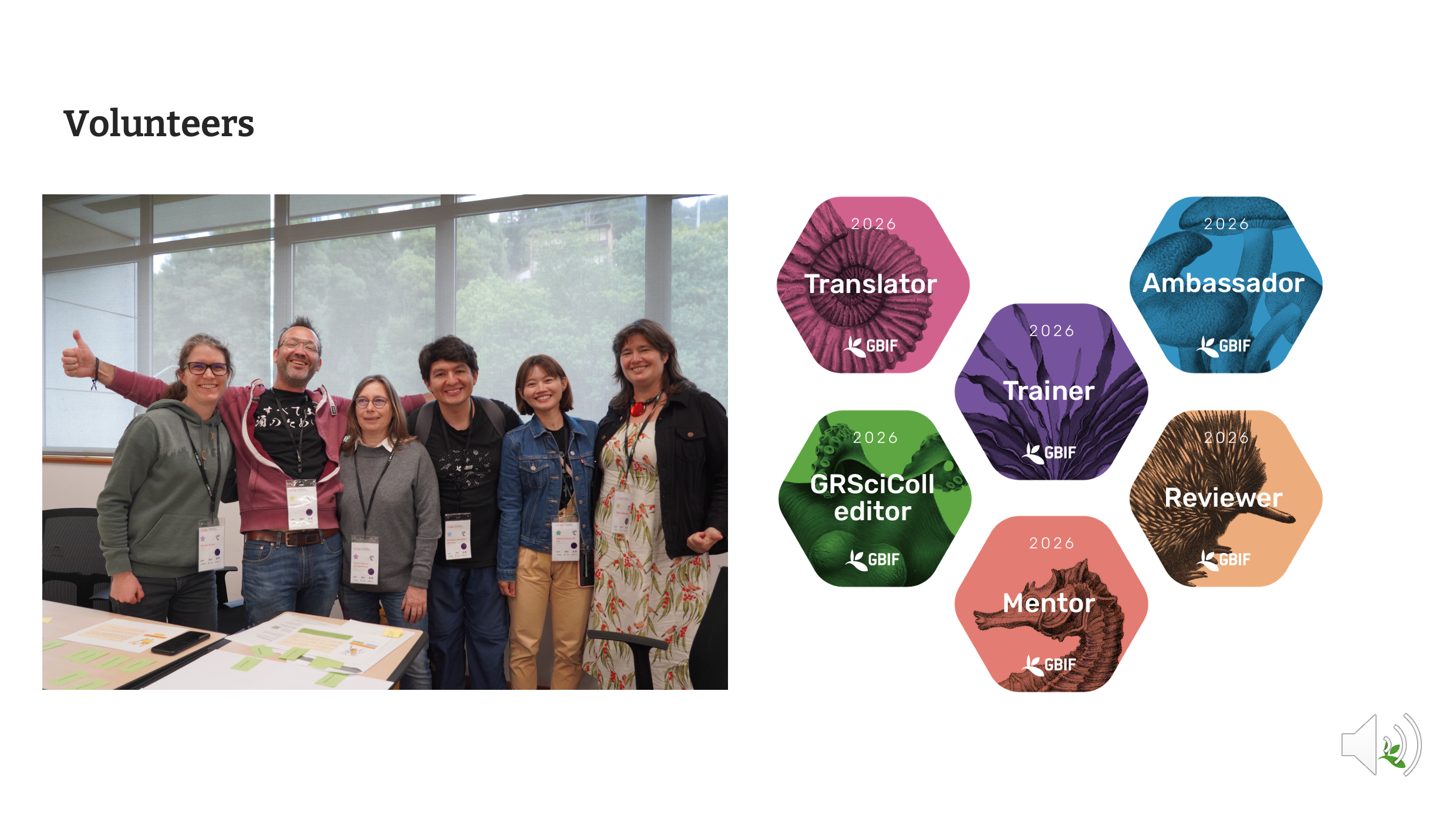
Diapositive 3 - Bénévoles
Nous avons catégorisé les différents rôles que les individus jouent dans la communauté.
Cette vidéo présente quatre façons différentes de se porter volontaire pour partager son expertise afin de renforcer la communauté de pratique du GBIF, en tant que mentor, formateur, traducteur ou ambassadeur des données ouvertes sur la biodiversité. Ces rôles ne s’excluent pas mutuellement. De nombreuses personnes contribuent en jouant plusieurs de ces rôles à la fois.
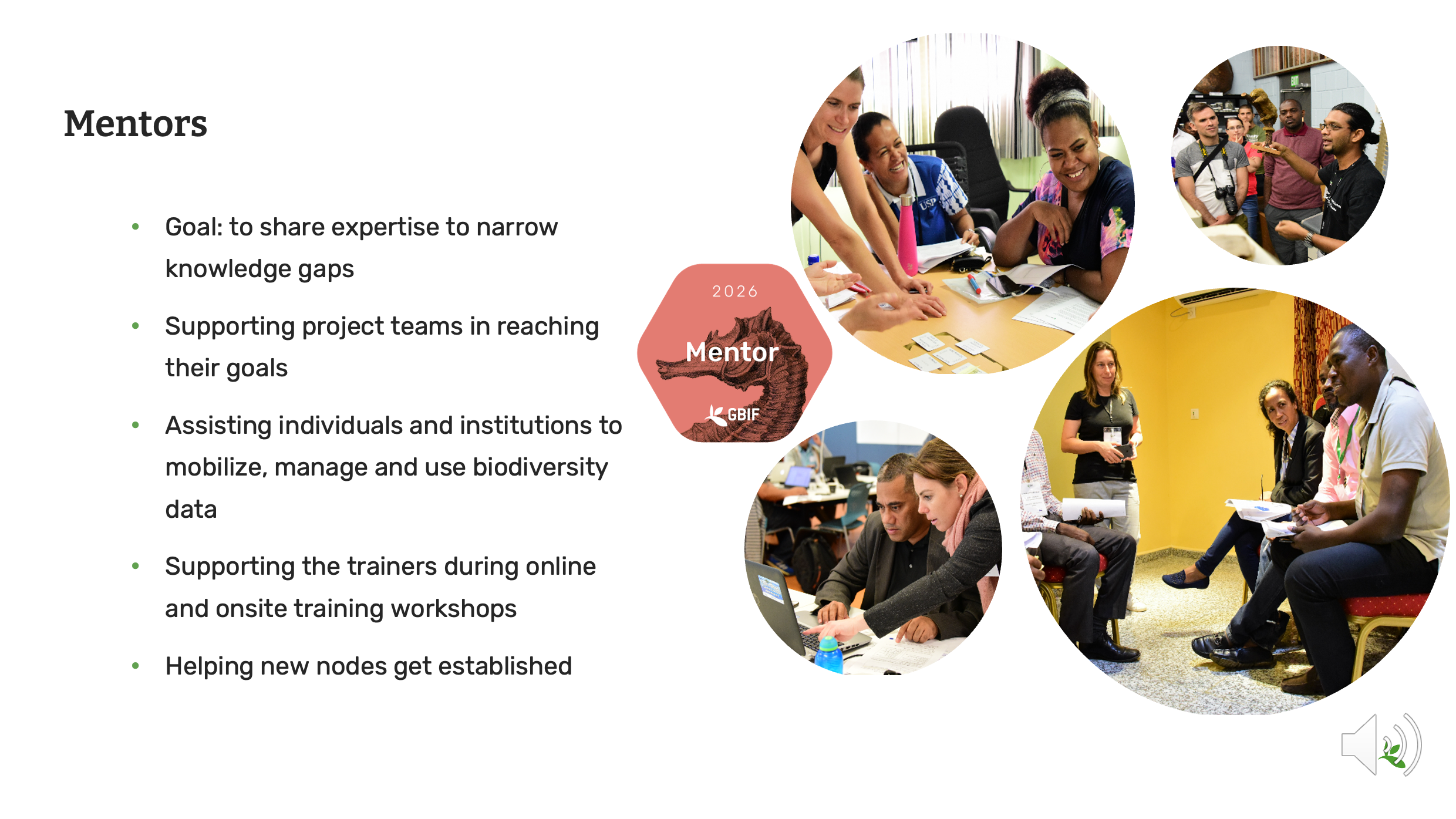
Diapositive 4 - Mentors
Les mentors bénévoles sont des membres de la communauté GBIF qui possèdent une expertise dans des domaines couvrant la mobilisation des données, la gestion des données, l’analyse et l’utilisation des données et la gestion des nœuds.
Ils partagent leur expertise avec les nouveaux membres de la communauté afin de combler les lacunes en matière de connaissances.
Des mentors bénévoles apportent leur soutien aux équipes travaillant sur des projets financés par des programmes tels que le programme Biodiversity Information for Development (BID).
Ils soutiennent également les individus et les institutions de la communauté qui ont besoin d’aide pour démarrer la mobilisation, la gestion et l’utilisation des données.
Lors des ateliers de formation, nous invitons des mentors à assister les formateurs en travaillant avec des groupes de participants pour les soutenir dans leur apprentissage.
Les mentors des responsables de nœuds sont des membres expérimentés des nœuds GBIF existants qui aident les nouveaux nœuds GBIF à s’établir.
Diapositive 5 - Formateurs
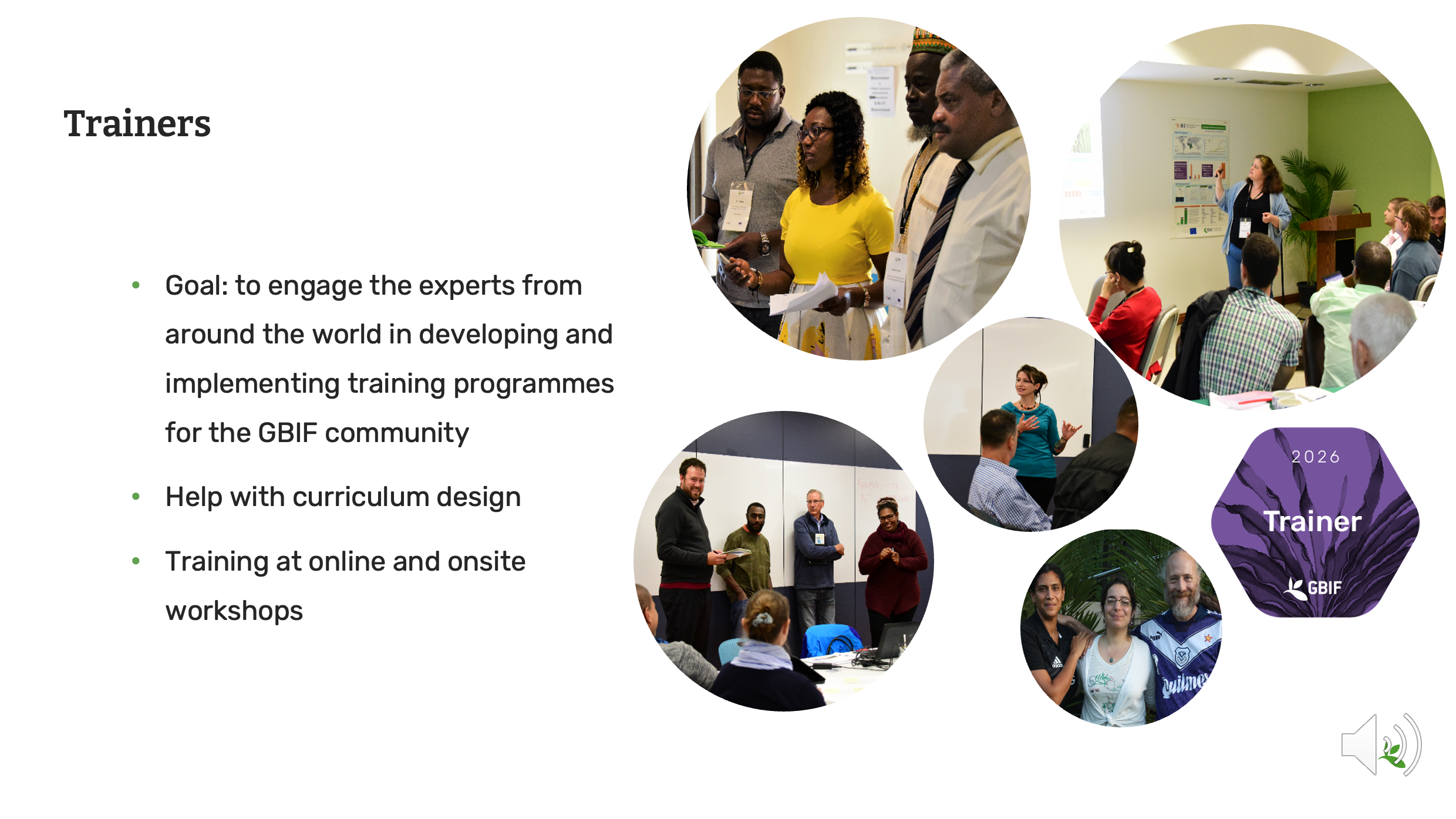
Certains mentors bénévoles deviennent également formateurs et forment les nouveaux membres de la communauté GBIF.
En collaboration avec le secrétariat du GBIF, les formateurs aident à concevoir des supports de formation réutilisables et des programmes d’études qui constituent la base des ateliers de renforcement des capacités du GBIF.
Les formateurs dispensent des formations sur place et en ligne, et nombre de leurs stagiaires deviennent eux-mêmes des mentors, voire des formateurs dans le cadre d’ateliers de reproduction.
Diapositive 6 - Ambassadeurs
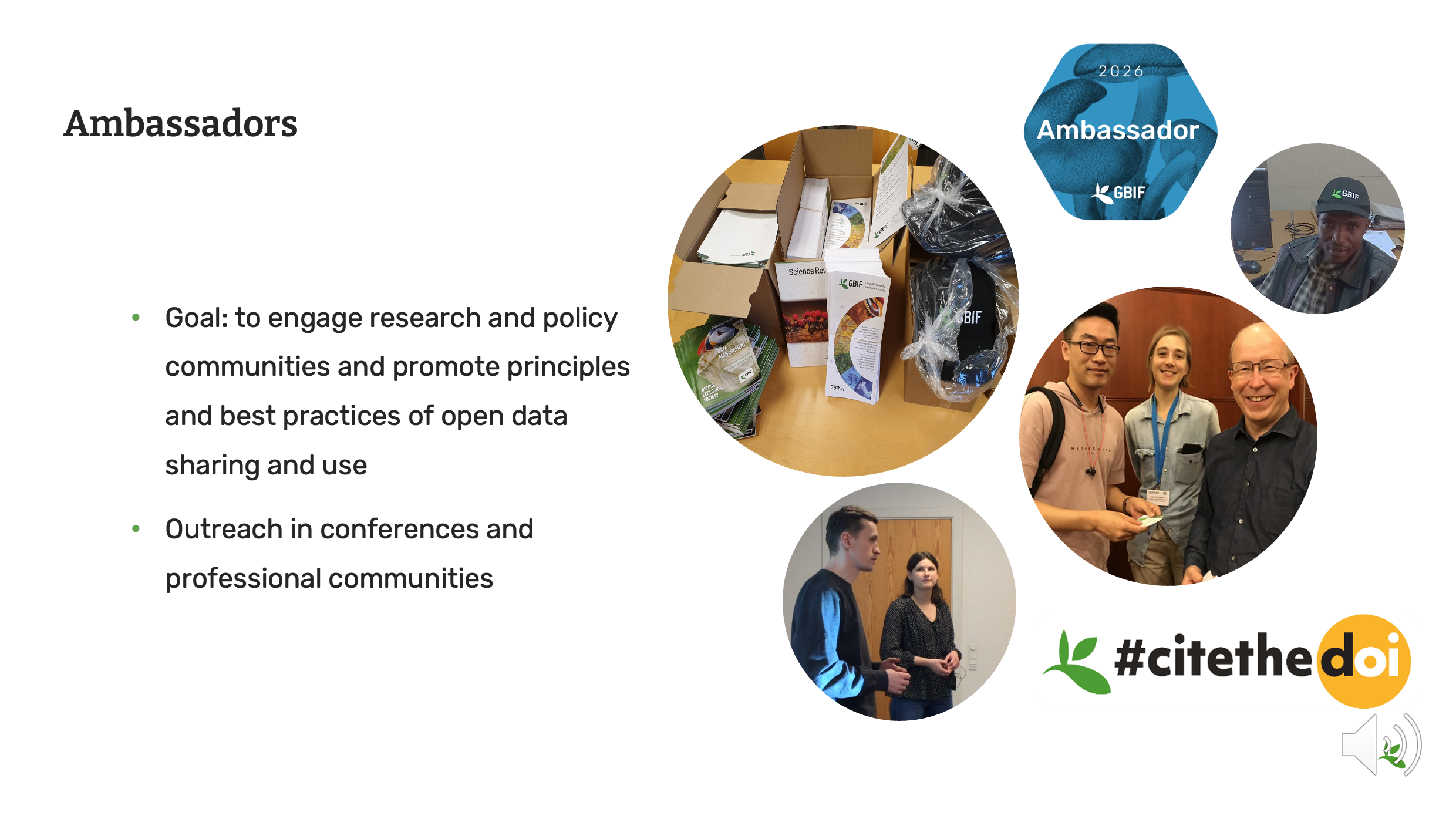
Les ambassadeurs des données ouvertes sur la biodiversité sont des professionnels de la biodiversité qui contribuent à promouvoir les principes et les bonnes pratiques du partage et de l’utilisation des données ouvertes au sein de leurs communautés professionnelles.
Il s’agit notamment de faire connaître les avantages et les possibilités qu’offre l’accès libre et gratuit aux données sur la biodiversité, ainsi que l’importance d’une utilisation responsable de ces données par le biais d’une citation et d’une attribution appropriées.
Les ambassadeurs peuvent aider à mobiliser les communautés de chercheurs et de décideurs politiques au-delà de celles que les nœuds et le secrétariat du GBIF peuvent atteindre.
Le secrétariat soutient les ambassadeurs en leur fournissant des diapositives et du matériel promotionnel à utiliser lors des conférences, ainsi qu’un retour d’information sur les résumés et les présentations.
Diapositive 7 - Traducteurs
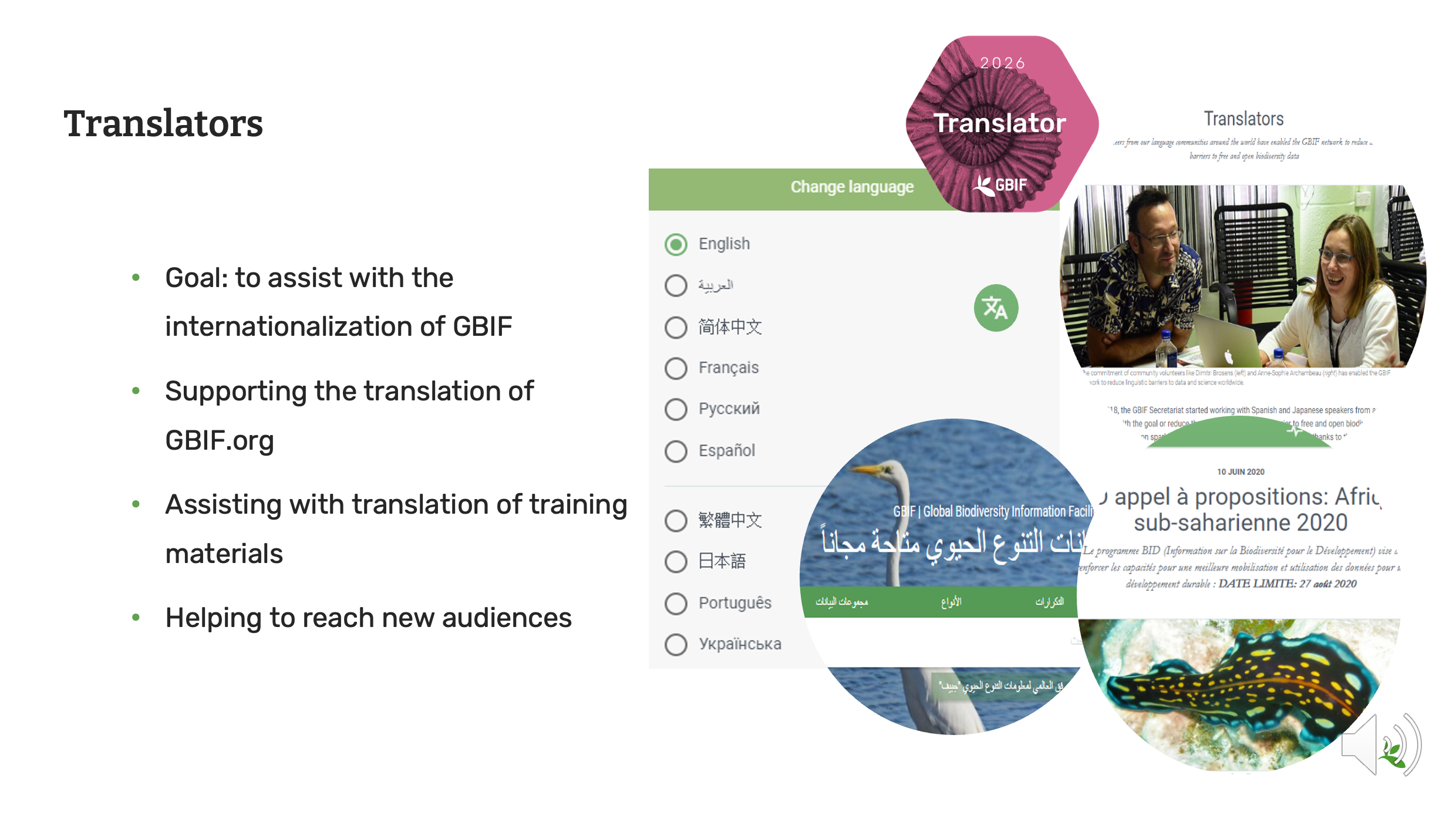
Enfin, les traducteurs jouent un rôle essentiel dans l’engagement du réseau mondial du GBIF.
La plupart des traductions du site web et des documents du GBIF sont effectuées par des traducteurs bénévoles de la communauté de pratique.
En plus de leurs compétences linguistiques, ces traducteurs ont une connaissance du domaine qui les aide à communiquer le GBIF aussi efficacement que possible à travers les langues, ce qui permet au GBIF d’atteindre de nouveaux publics.
Diapositive 8 - S’impliquer
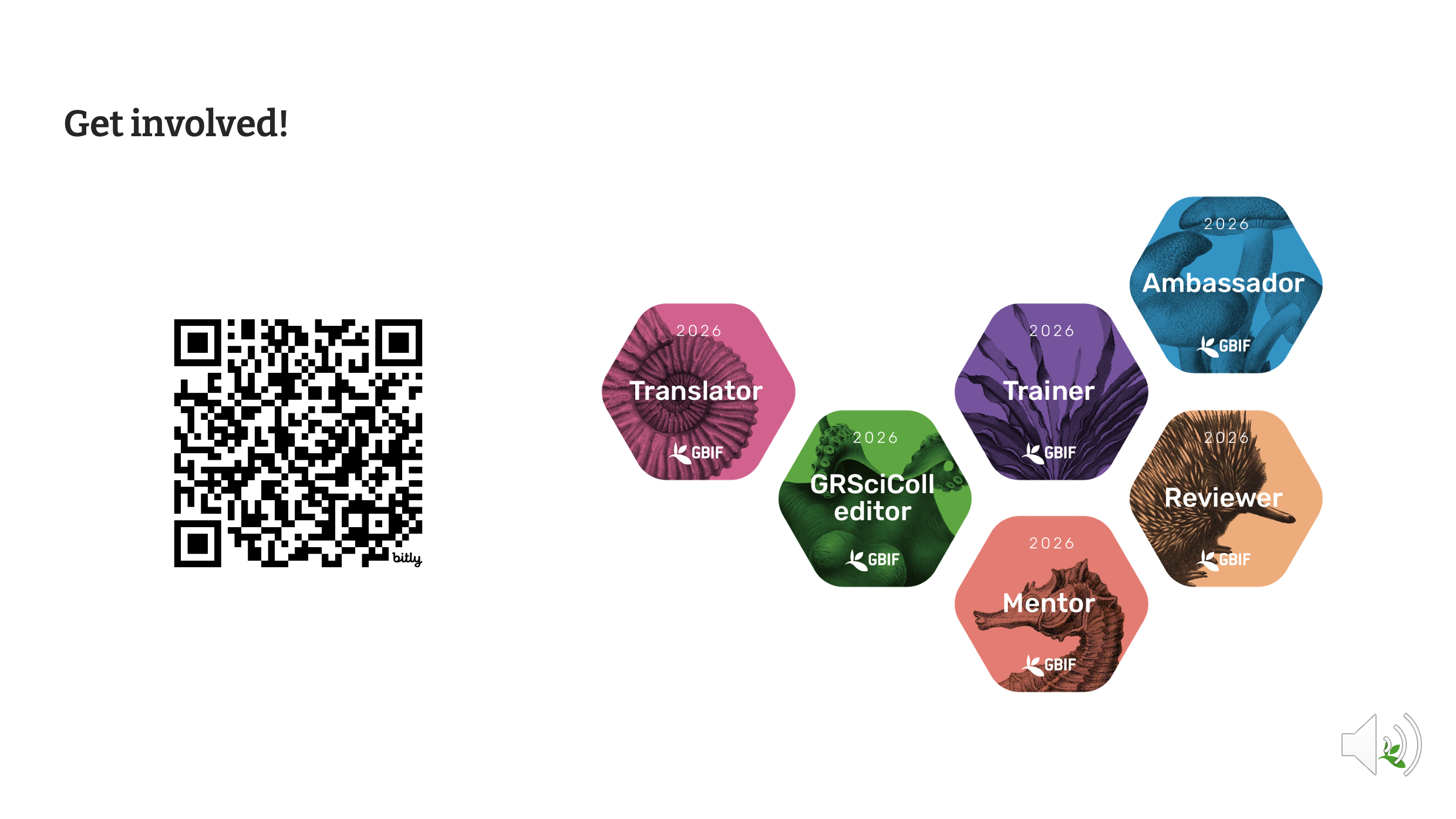
Nous avons le plaisir de vous inviter à participer à la communauté de pratique du GBIF. Vous trouverez sur le site web du GBIF de plus amples informations sur la manière de contribuer en tant que mentor bénévole, ambassadeur des données ouvertes sur la biodiversité et traducteur, et vous êtes invités à contribuer dans plusieurs de ces rôles. La communauté de pratique est votre communauté - n’hésitez pas à nous faire part de vos idées sur la manière dont nous pouvons la développer.
Nous vous remercions et nous nous réjouissons de travailler avec vous très bientôt.
Bénévole
Nous vous encourageons à vous demander si vous pouvez contribuer à la communauté de pratique du GBIF dans l’un ou l’autre de ces rôles. Nous serions heureux de recevoir votre candidature.
Vous pouvez également nous contacter à l’adresse volunteers@gbif.org pour discuter de la manière dont vous pouvez contribuer.
Renforcement des capacités et possibilités de financement
Le GBIF est un réseau mondial croissant de pays, d’économies et d’organisations participants, chacun ayant des priorités, des atouts et besoins différents en termes de capacités. Le renforcement des capacités est reconnu comme essentiel pour soutenir la performance durable du réseau des participants du GBIF et de tous ses membres, indépendamment de leur niveau de développement.
De manière générale, une grande partie du travail du GBIF contribue au renforcement des capacités. Les nœuds Participants assurent le développement des capacités au niveau national, fournissant souvent une formation aux individus et aux institutions au sein de leurs réseaux. La collaboration entre les Participants par le biais des structures de gouvernance du GBIF permet des échanges et des partenariats internationaux et régionaux.
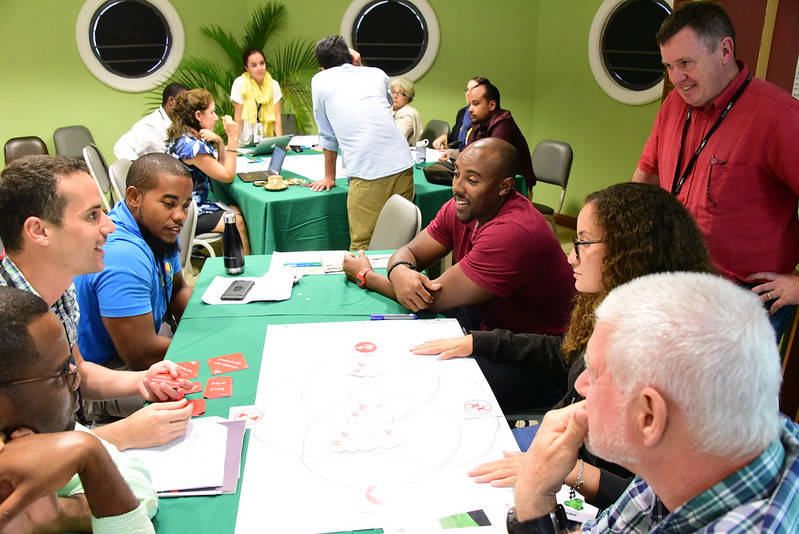
Le secrétariat du GBIF soutient le travail du réseau, qui contribue au développement des capacités, en particulier en coordonnant les activités, faisant participer les bénévoles à la communauté de pratique et en soutenant le développement de matériel de formation de base. Le rôle du Secrétariat dans les activités de renforcement des capacités est plus axé sur la facilitation que sur la mise en œuvre: fournir des conseils, documenter les meilleures pratiques, rassembler le matériel de formation, coordonner les activités et créer ou aligner les opportunités. Le Secrétariat joue un rôle supplémentaire dans le renforcement des capacités en fournissant des opportunités de financement pour des projets collaboratifs dans le réseau, souvent en se concentrant sur la mobilisation de données de biodiversité, sur l’utilisation de données mobilisées par le GBIF et sur le renforcement les infrastructures nationales d’information sur la biodiversité.
Vous pouvez trouver plus d’informations sur les programmes de financement du GBIF sur notre site Web.
S’engager avec le GBIF
Les activités de communication jouent un rôle clé dans le renforcement et le soutien du réseau GBIF en améliorant la visibilité, l’échange de connaissances et l’engagement au sein de la communauté. Restez en contact avec le GBIF pour vous tenir au courant des événements, des opportunités, des nouveautés et d’autres nouvelles.
Lettre d’information
Abonnez-vous à la GBIF newsletter, une compilation de nouvelles, d’événements et d’opportunités, envoyée par e-mail tous les deux mois.
Réseaux sociaux
Suivez le GBIF sur les comptes de réseaux sociaux ci-dessous et n’hésitez pas à les taguer pour aider à amplifier l’activité au sein de votre nœud/réseau. Parmi les exemples d’activités à promouvoir sur les réseaux sociaux et à taguer GBIF, citons les formations, les événements, les messages de célébration, les nouveaux ensembles de données mobilisés pour GBIF et les exemples d’utilisation des données.
-
LinkedIn : @gbif
-
Facebook : @gbifnews
-
Mastodon : @biodiversity.social/@gbif
-
Bluesky : @gbif.org
Évènements
Les événements réguliers comprennent des sessions du Club de l’utilisation des données, l’heure d’assistance technique pour les nœuds et d’autres webinaires couvrant des sujets d’intérêt pour l’ensemble de la communauté GBIF.
Vous pouvez suivre les événements pertinents pour le réseau dans le calendrier des événements du GBIF. Si vous organisez ou avez connaissance d’un événement pertinent et ouvert à la communauté du GBIF (c’est-à-dire qui n’est pas un événement fermé), veuillez notifier le secrétariat du GBIF pour que votre événement soit inclus dans le calendrier des événements.
Révision
|
Testez vos connaissances sur les concepts abordés dans ce module. Certaines questions peuvent comporter plusieurs réponses correctes. Vous pouvez en savoir plus sur les réponses dans le Annexe des solutions. |